

Seventeen months ago, Kilmar Abrego Garcia — a Maryland sheet-metal worker with a 2019 court order barring his deportation to El Salvador — was put on a plane to that country's CECOT mega-prison anyway. What followed has been a cascading series of courtroom defeats for the government: an admitted “administrative error,” a Supreme Court order, a criminal indictment dismissed as “vindictive prosecution,” and two rulings barring his re-detention. This article lays out the strategy the administration pursued, move by move, how each one fared, and where the case stands today.
Five Moves, Five Failures
1. Remove first, litigate later
Abrego Garcia was deported to El Salvador on March 15, 2025, despite a standing immigration-court order protecting him from removal to that country. An ICE official conceded in a sworn declaration that the deportation was an “administrative error” — while insisting he remained removable on other grounds. The error converted a routine immigration case into a national due-process fight the government has been losing ever since.
2. Resist the return order
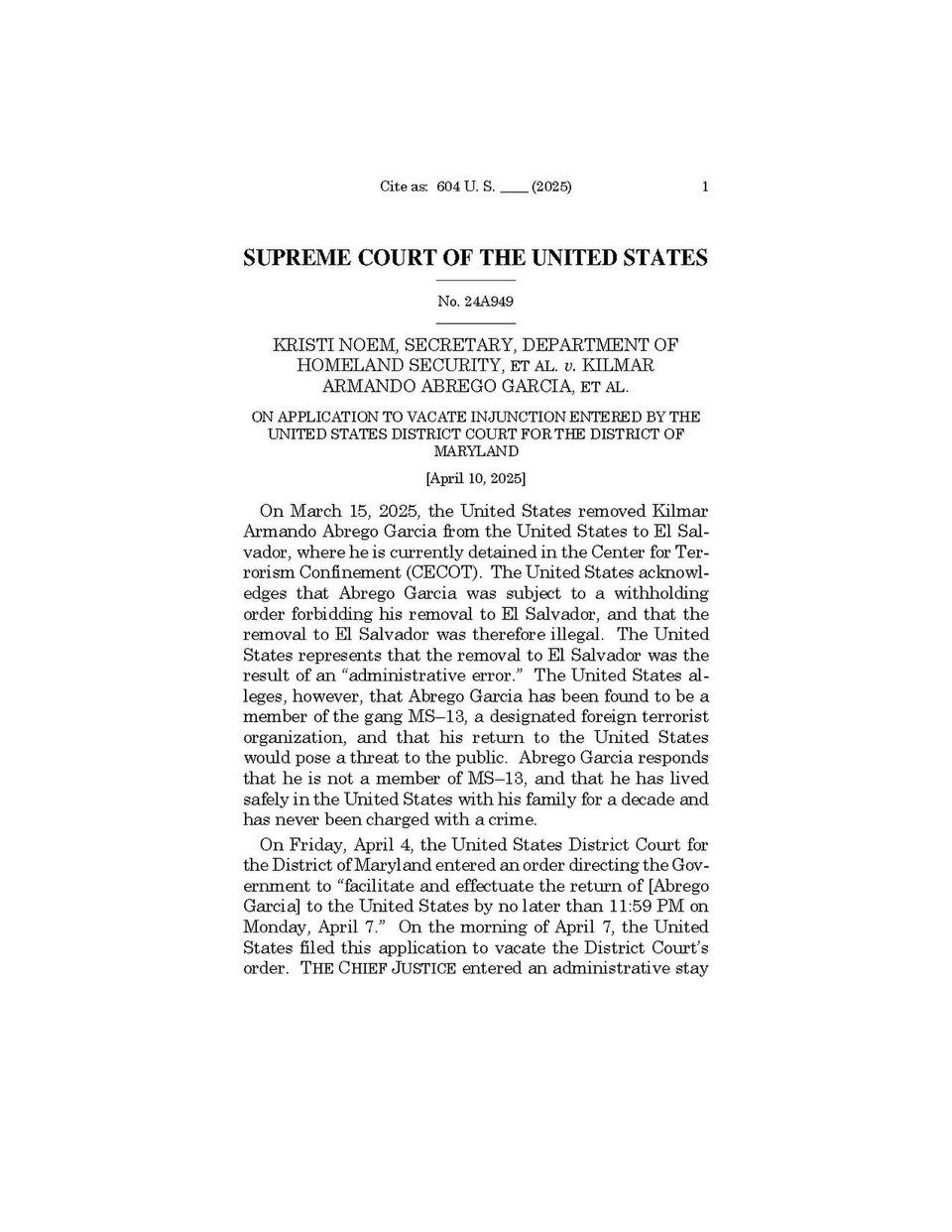
When U.S. District Judge Paula Xinis ordered the government to “facilitate and effectuate” his return, the Justice Department argued that a court could not compel the president to conduct diplomacy. The Supreme Court disagreed on April 10, 2025, directing the administration to work to bring him back. The DOJ attorney who told the court he had “no answers” for the legal basis of the seizure was placed on indefinite leave the next day.
3. Prosecute as leverage
He was finally returned on June 6, 2025 — but into handcuffs, indicted in Tennessee for human smuggling based on a 2022 traffic stop. After an evidentiary hearing on the government's motives, U.S. District Judge Waverly Crenshaw dismissed the indictment on May 22, 2026, finding evidence of “vindictive prosecution”. The Washington Post called it “an extraordinary defeat for the administration.” The Justice Department has appealed the dismissal.
4. Third-country roulette
Barred from sending him to El Salvador, ICE announced plans to deport him to Uganda — within minutes of his release from jail in August 2025 — then pivoted to Liberia. A federal judge temporarily blocked the Liberia removal on March 24, 2026. When Costa Rica agreed to accept him in April, the administration declined and pressed on with Liberia, a country his lawyers note he has no connection to.
5. Detention as pressure
ICE re-detained him at a Baltimore check-in on August 25, 2025. A federal judge ordered his release that December, and in February 2026 the court barred ICE from re-detaining him at all. He has lived free in Maryland since — while the government appeals that ruling too.
The Full Timeline


- Oct 10, 2019 — An immigration judge bars his deportation to El Salvador, finding a gang threatened his family. He receives a work permit and lives under federal supervision.
- Mar 12, 2025 — ICE detains him in Baltimore while he is driving with his 5-year-old son.
- Mar 15, 2025 — Deported to El Salvador's CECOT mega-prison despite the 2019 order.
- Apr 1, 2025 — An ICE official admits in a sworn declaration the deportation was an “administrative error.”
- Apr 4, 2025 — Judge Xinis orders the government to return him; the DOJ lawyer who cannot explain the seizure's authority is sidelined the next day.
- Apr 10, 2025 — The Supreme Court rules the administration must work to bring him back.
- Jun 6, 2025 — Returned to the U.S. and indicted in Tennessee for human smuggling, based on a 2022 traffic stop. He pleads not guilty.
- Aug 22, 2025 — Released from jail pending trial; ICE immediately notifies plans to deport him to Uganda.
- Aug 25, 2025 — Reports to a Baltimore ICE office and is taken into custody.
- Oct 24, 2025 — The U.S. announces Liberia has agreed to accept him.
- Dec 11, 2025 — A federal judge orders his release from ICE custody.
- Feb 17, 2026 — A judge rules ICE cannot re-detain him.
- Feb 26, 2026 — Evidentiary hearing in Nashville on whether the prosecution is vindictive; the prosecutor testifies no one from the White House or DOJ directed the charges.
- Mar 24, 2026 — A federal judge temporarily blocks deportation to Liberia.
- Apr 2026 — Costa Rica agrees to accept him; the administration insists on Liberia anyway.
- May 22, 2026 — Judge Crenshaw dismisses the criminal case, finding evidence of “vindictive prosecution.”
- Jun 22, 2026 — DOJ appeals the dismissal to the Sixth Circuit.
- Aug 14, 2026 — The Fourth Circuit allows the government to appeal the no-detention ruling; the deportation fight returns to Judge Xinis.
- Aug 20, 2026 — Liberia receives its first group of U.S. third-country deportees — Abrego Garcia is not among them.
Where It Stands Now
Abrego Garcia is free and living with his family in Maryland, protected by court orders from both detention and removal. But nothing is final: the Justice Department is appealing the criminal dismissal to the Sixth Circuit and the no-detention ruling to the Fourth Circuit, and the preliminary injunction blocking his deportation to Liberia is the only barrier between him and a removal pipeline that began operating this month. The underlying civil case — over whether the government violated his due-process rights at every step — continues before Judge Xinis in Maryland.
Why It Matters
Whatever one thinks of immigration enforcement levels, this case is now the leading test of whether court orders bind the executive branch in immigration matters — and of how far “third-country” removals can go. Supporters of the administration's approach see an appealable string of adverse rulings from judges they consider hostile; critics see a pattern of punishing one man for the government's own admitted mistake. The appellate courts will sort out which reading the law supports.
Sources
- Associated Press — case timeline
- ABC News — wrongful-deportation timeline
- Associated Press — criminal case dismissed (May 22, 2026)
- NPR — release from ICE custody (Dec 11, 2025)
- CBS — Liberia deportation blocked (Mar 24, 2026)
- CBS News — Liberia receives first third-country deportees (Aug 20, 2026)
- Tennessee Star — Fourth Circuit ruling (Aug 14, 2026)
- CourtListener — United States v. Abrego Garcia, No. 3:25-cr-00115 (M.D. Tenn.)
Image credits: Sen. Chris Van Hollen meeting photo — public domain; Supreme Court order — public domain (U.S. government work); CECOT security forces — Casa Presidencial (El Salvador), CC0. All via Wikimedia Commons.
Discussion (0)
Join the discussion. Pick a name and your party — that’s the whole signup. Comments are color-coded: Democrat Independent Republican. No links, no slurs — disagree like a citizen.
No comments yet — be the first.
Comments are the sole responsibility of their authors and do not reflect the views of CommonHouseParty.org. Party labels are self-declared and unverified — they describe what a commenter chose at signup, nothing more. Accounts are name-and-party only, so identity cannot be guaranteed. We may remove comments that contain links, slurs, personal attacks, or private information, and repeat abuse may be blocked. We log the IP address of every signup and comment for abuse prevention and moderation; these logs are not published. By posting, you grant us permission to display your comment on this page.